FIFA
How Away Supporter Allocations Are Negotiated
Visiting fans get a block of seats fixed by competition rules, policing advice and club negotiation, not by demand, and the reciprocal season is why.
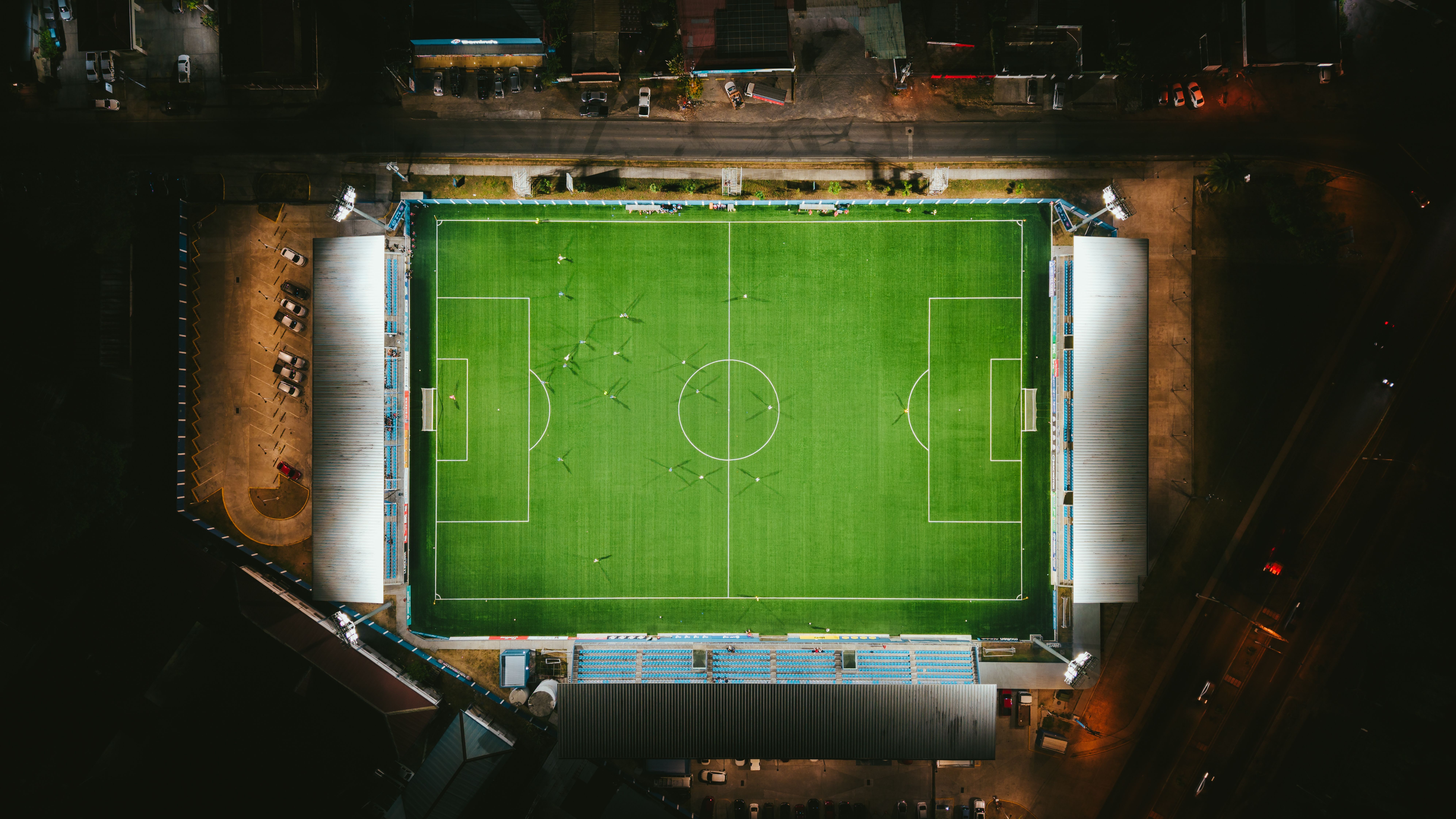
Every competitive football fixture sets aside a block of seats for the visiting club's supporters, and the size of that block is rarely decided by demand. It is the product of competition regulation, policing advice and a negotiation between two clubs that meet again in reverse.
The rule that sets the floor
Competition regulations usually oblige a home club to offer visitors a minimum share of capacity, expressed as a fraction of the ground rather than a fixed seat count. The fraction travels with the stadium size.
That floor exists because a home club has an obvious commercial reason to sell every seat to its own supporters, who buy more merchandise and food and renew season tickets. Away fans are worth less per head.
Without a mandated minimum the away section would shrink toward nothing, and the reciprocal shape of a league season would collapse, since each club is the visitor for half of its fixtures.
Why policing advice can override commerce
Local police assess each fixture for risk, considering rivalry history, kick-off time and the transport links between the two cities. Their advice can cut an allocation well below the regulatory floor.
The reasoning is that segregation inside a ground depends on segregation outside it. A large away contingent arriving through a single station concentrates crowd movement into a narrow corridor at a predictable hour.
Clubs can appeal, and supporter groups often do so publicly, but the decision usually rests with the authority responsible for public order rather than with either club's commercial department.
Reciprocity as the enforcement mechanism
The strongest pressure on a home club to be generous is the return fixture. Cutting an allocation invites the same treatment months later, and both sets of supporters keep score.
This creates an informal equilibrium in which clubs of similar size settle on comparable numbers without needing arbitration. The regulation matters most for mismatched pairings where reciprocity offers no leverage.
In cup competitions the reciprocal logic weakens, because the tie may never be repeated. Allocations there tend to be governed more tightly by the competition organiser for exactly that reason.
How the block is priced
Away tickets are often capped at a price set by the competition rather than the host, a rule introduced because visiting supporters have no market alternative once they commit to travel.
Capping prevents a home club from treating the away end as a premium product for a captive audience. It also keeps travelling support viable for fans making several long trips a season.
Supporter organisations lobbied for these caps for years, and they are one of the clearest cases of organised fan pressure changing a competition rule rather than a single club's policy.
Where the seats physically sit
Away sections are usually placed in a corner or behind a goal, chosen for the ease of isolating an entrance and a stairwell rather than for the quality of the view.
That placement shapes atmosphere. A concentrated block behind a goal produces coordinated noise, which is why visiting support frequently sounds louder than its share of the crowd would suggest.
Newer stadiums increasingly design the away area into the structure from the start, with its own concourse and turnstiles, which raises the allocation a safety officer will accept.
Also by Brad Gilbert
- Deconstructing break point pressure: How to Optimize racket tension adjustment for SuccessCourt Coverage
- Deconstructing first serve speed: How to Optimize baseline rally endurance for SuccessCourt Coverage
- Deconstructing outsole traction: How to Optimize serving strategies for SuccessCourt Coverage
- Deconstructing reflex volleys: How to Optimize spin rate optimization for SuccessCourt Coverage


