Gridiron News
How Marching Bands Shape Stadium Sound
Live bands at American football stadiums provide structured noise at scheduled moments, and their placement, repertoire and cues make them part of the crowd's coordination.
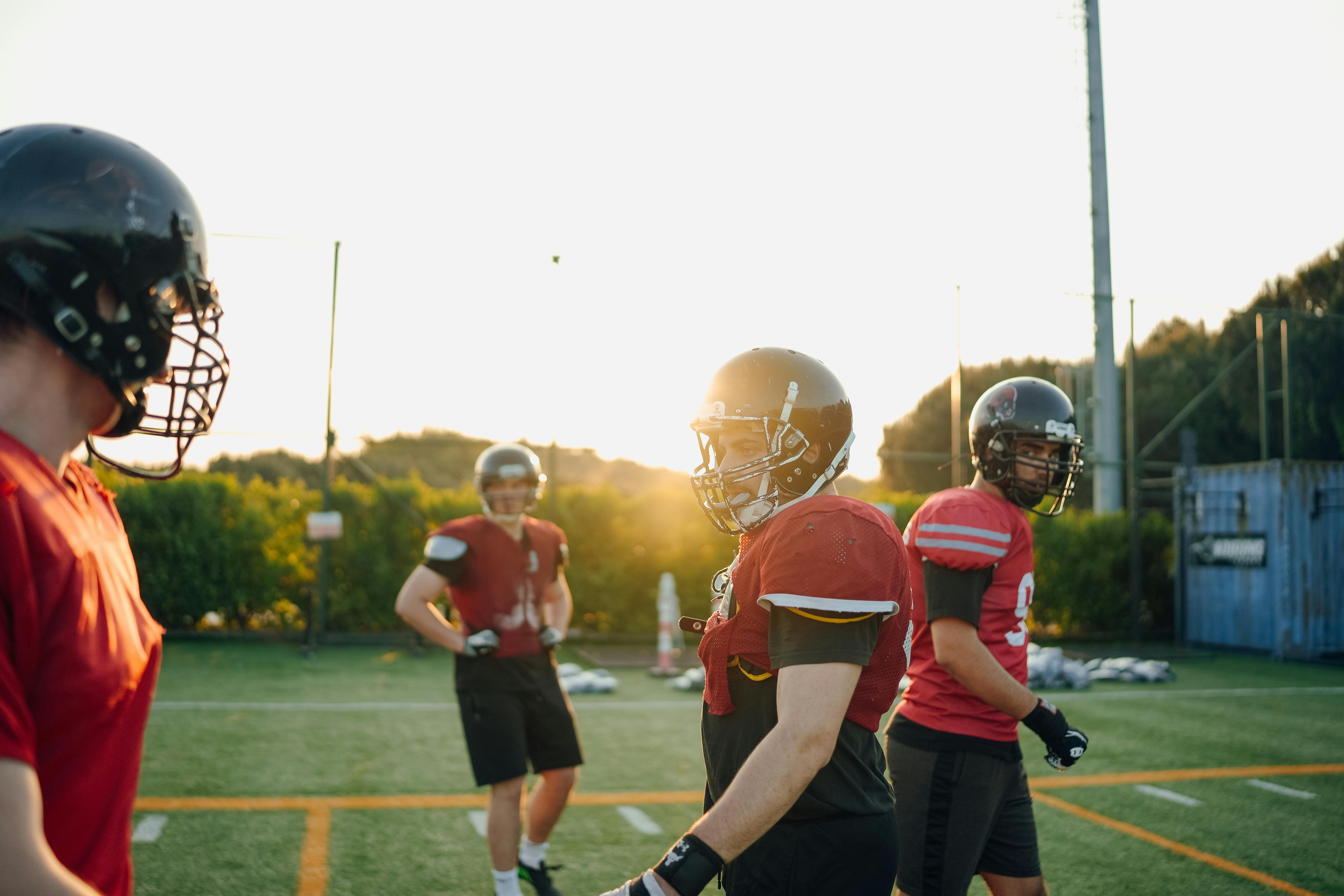
A marching band at a football stadium is not background entertainment. It functions as the crowd's timing mechanism, and the way it is positioned and cued reflects that role directly.
The band tells the crowd when to make noise
Football is a stop-start game with defined breaks, and the band fills those breaks with material that signals what the crowd is expected to do next.
Short recognisable phrases played on defensive downs prompt the crowd to make noise at the moment the opposing offence needs to communicate.
Because the cue is audible everywhere at once, tens of thousands of people can act simultaneously without any coordination beyond hearing the same phrase.
Placement is an acoustic decision
Bands sit low in a corner or an end zone where the sound projects across the bowl and reaches the field rather than being absorbed by the seating above.
Their position also places them adjacent to the student section, which amplifies both, since a large singing block next to live brass carries much further than either alone.
Stadium designers now consider band placement in renovation plans, because moving a band to a less resonant position has an audible effect on the whole building.
Repertoire is built for repetition
Material must survive being played dozens of times in a single afternoon, which favours short, rhythmic pieces with an immediately recognisable opening.
Fight songs sit at the centre of this and are attached to specific moments such as scores and entrances, so their meaning is tied to the event rather than the tune.
Newer arrangements of popular music are added continuously, and the mix of traditional and contemporary material is a recurring negotiation with the audience.
The band is an academic organisation
Members are students who rehearse for many hours weekly, and participation is often a formal course commitment with attendance requirements and academic credit.
This means the ensemble is staffed and funded through the institution rather than the athletic department, which affects who controls its performances.
Travel to away fixtures is expensive and usually limited to a subset of the band, which is why visiting bands are smaller and quieter than home ones.
Why recorded music has not replaced them
Public address systems can produce more volume with less cost, and many venues use them heavily between plays for exactly that reason.
What recordings cannot do is respond in real time to the game, adjusting length and intensity to whatever is happening on the field at that moment.
A band watching the game plays into gaps a recording would miss, and the responsiveness is what keeps live ensembles in buildings that could easily do without them.
Also by Brad Gilbert
- Deconstructing break point pressure: How to Optimize racket tension adjustment for SuccessCourt Coverage
- Deconstructing first serve speed: How to Optimize baseline rally endurance for SuccessCourt Coverage
- Deconstructing outsole traction: How to Optimize serving strategies for SuccessCourt Coverage
- Deconstructing reflex volleys: How to Optimize spin rate optimization for SuccessCourt Coverage


