Hoop Central
Why Arena Atmosphere Depends On Seating Geometry
Indoor arenas concentrate crowd noise in ways stadiums cannot, and the seating angle, roof height and proximity to the floor determine how loud a building feels.
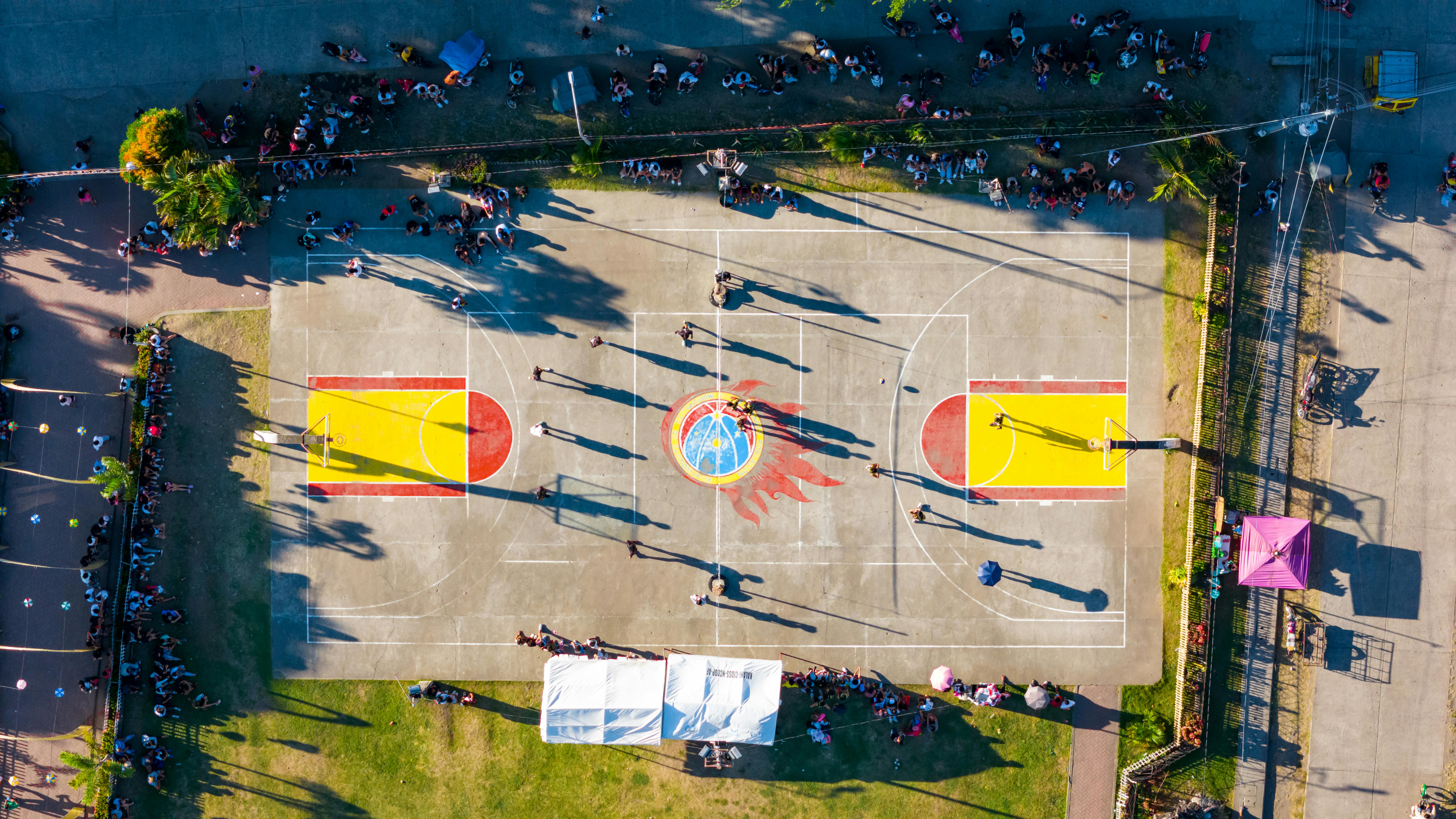
Two arenas holding the same number of spectators can feel entirely different. The difference comes from geometry, and the variables involved are well understood by the people who design these buildings.
Steepness puts people closer
A steeply raked bowl places the same number of seats nearer the floor, because the seating rises quickly rather than spreading outward across a shallow slope.
Proximity affects sound arrival and the sense of enclosure, and it also means the players hear the crowd as a nearby presence rather than a distant wash.
Steep bowls are more expensive and constrain concourse design, which is why they are more common in purpose-built arenas than in converted multi-purpose halls.
The roof does the reflecting
Indoor sound reflects off the ceiling back onto the floor, so roof height and material determine how much crowd noise returns rather than being absorbed.
A low, hard ceiling produces a loud, immediate room, while a high roof with absorbent surfaces disperses the same noise and makes the building feel emptier.
Arenas designed for concerts as well as sport face a genuine conflict here, since music requires controlled acoustics and sport benefits from reverberation.
Where the loud sections sit
Student sections, supporter groups and season ticket blocks are usually placed behind a basket and low in the bowl, where their noise reaches the floor most directly.
Concentrating vocal support rather than distributing it is deliberate, because coordinated noise from one block carries further than the same people spread evenly.
Premium seating placed courtside along the sidelines has the opposite effect, inserting a quiet band between the floor and the general admission crowd.
The premium ring is an acoustic problem
Suites and club levels sit between the lower and upper bowls in most modern arenas, and they are enclosed, which removes their occupants from the sound entirely.
This creates a horizontal gap in the noise, separating the upper tier from the lower one and reducing the sense of a single crowd.
Some newer designs push premium seating to the ends or below the seating bowl specifically to keep the tiers acoustically connected.
Why smaller buildings often win
College and lower-league arenas frequently sound louder than larger professional ones despite holding a fraction of the people, because they are steep, low-roofed and full.
Occupancy matters more than capacity, since empty seats absorb nothing and reflect nothing, and a half-full large arena is quieter than a packed small one.
That is why teams sometimes curtain off upper tiers, trading capacity for a building that sounds and feels like a contested environment.
Also by Brad Gilbert
- Deconstructing break point pressure: How to Optimize racket tension adjustment for SuccessCourt Coverage
- Deconstructing first serve speed: How to Optimize baseline rally endurance for SuccessCourt Coverage
- Deconstructing outsole traction: How to Optimize serving strategies for SuccessCourt Coverage
- Deconstructing reflex volleys: How to Optimize spin rate optimization for SuccessCourt Coverage


